
EMOTIONAL RELEASE & INTEGRATION
A Kabbalistic Prayer & Psalm Guide for Releasing Stored Emotion, Completing Healing Cycles & Integrating the Soul
🌿 INTRODUCTION — EMOTIONAL RELEASE IN KABBALAH
EMOTIONAL RELEASE IN KABBALAH
In Kabbalah, healing is not complete when pain stops hurting.
It is complete when the soul integrates what was felt.
Emotional release is the process of allowing stored, unexpressed emotion to move through and out of the system.
Integration is what follows — when the soul reorganizes itself at a higher level of wholeness.
The Zohar teaches:
“What is not released returns; what is released can be elevated.”
Many people attempt healing through insight alone.
Kabbalah teaches that emotion must be embodied, expressed, and then integrated, or it remains imprinted in the soul and body.
This prayer supports the final stage of emotional healing — not reopening wounds, but allowing what is ready to leave to do so gently and safely.
🧭 SIGNS EMOTIONS ARE READY FOR RELEASE & INTEGRATION
Emotional work has been done, but relief feels incomplete

Prayers For Emotional Release
Old feelings resurface without intensity
Tears come without a clear story
Fatigue after emotional processing
Desire for closure or completion
Feeling “lighter” but unsettled
Sense that something is finishing
Emotional neutrality emerging
Increased clarity after release
Desire to move forward
Release does not mean forgetting.
Integration means the emotion no longer controls the present.EMOTIONAL RELEASE
📜 PSALMS FOR EMOTIONAL RELEASE & COMPLETION
1. Psalm 30:3 — From Depth to Wholeness
Hebrew:
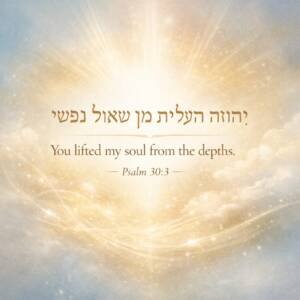
יְהוָה הֶעֱלִיתָ מִן־שְׁאוֹל נַפְשִׁי
Transliteration:
Adonai he’elita min she’ol nafshi.
English:
“You lifted my soul from the depths.”
This psalm affirms safe emergence after emotional descent.
2. Psalm 66:12 — Passing Through
Hebrew:
עָבַרְנוּ בָאֵשׁ וּבַמָּיִם
Transliteration:
Avarnu va’esh u’va’mayim.
English:
“We passed through fire and water.”
Used to acknowledge intensity without remaining in it.
3. Psalm 116:7 — Returning to Rest
Hebrew:
שׁוּבִי נַפְשִׁי לִמְנוּחָיְכִי
Transliteration:
Shuvi nafshi limnuchaychi.
English:
“Return, my soul, to your rest.”
This psalm marks emotional completion and grounding.
🔮 DIVINE NAMES FOR RELEASE & INTEGRATION
1. מ־ת־ק (Mem–Tav–Kuf)
Hebrew: מתק
Transliteration: MaTaK
Healing qualities:
Sweetens emotional residue
Softens intensity after release
Supports emotional digestion
2. א־ל־ד (Aleph–Lamed–Dalet)
Hebrew: אלד
Transliteration: ELaD
Healing qualities:
Integrates emotional learning
Restores internal coherence
Supports forward movement
3. ל־ו־ו (Lamed–Vav–Vav)
Hebrew: לוו
Transliteration: LeVav
Healing qualities:
Harmonizes emotional layers
Stabilizes the nervous system
Grounds emotional flow
✨ ANA B’KOACH FOR COMPLETION — LINE 7
Hebrew:
יָחִיד גֵּאָה לְעַמְּךָ פְּנֵה זֹכְרֵי קְדֻשָּׁתֶךָ
Transliteration:
Yachid ge’eh l’amcha, p’neh zochrei kedushatecha.
English:
“Exalted One, turn toward Your people who remember Your holiness.”
This line seals the process and returns the soul to unity.
🌹 KABBALISTIC COMMENTARY — COMPLETION BRINGS PEACE
The Zohar teaches:
“Peace comes not from avoidance, but from completion.”
Without integration:
healing feels endless
emotions resurface repeatedly
fatigue accumulates
insight does not translate into peace
With integration:
memories lose emotional charge
identity stabilizes
wisdom replaces pain
clarity increases
the soul feels settled
Emotional release is movement.
Integration is arrival.
🌿 USAGE IN SESSION — EMOTIONAL RELEASE & INTEGRATION PRACTICE
Invite the client to lie down or sit fully supported.
Encourage slow, natural breathing without intention.
Recite Psalm 66:12 to acknowledge what has passed.
Speak the Divine Name מתק (MaTaK) three times to soften residue.
Recite Psalm 116:7 to return the soul to rest.
Use Ana B’Koach Line 7 to seal the process.
Invite the affirmation:
“I release what is complete. I integrate what I have learned.”Close with silence and grounding.
🌊 Deeper Kabbalistic Integration — The Soul After Release 
In Kabbalistic understanding, emotional release corresponds to a movement through the lower sefirot — particularly Netzach and Hod — where experience, memory, and reaction are processed. Integration occurs when the experience rises into Tiferet, the place of harmony and balanced identity. What was fragmented becomes coherent. What was reactive becomes reflective.
Stored emotion is not a flaw. It is unfinished spiritual movement. When an experience overwhelms the nervous system, the body protects the soul by holding what could not yet be metabolized. Over time, through safety and awareness, the system signals readiness. The resurfacing of softer emotion, unexplained tears, or gentle fatigue are often signs that the psyche trusts the present enough to complete the🌿 THE TEN SEFIROT EXPLAINED FOR DUMMIES past.
Integration is not dramatic. It is quiet reorganization.
From a spiritual psychology perspective, integration means:
The memory remains, but without charge.
The body no longer braces against what has already happened.
The nervous system shifts from vigilance to regulation.
Identity expands beyond the wound.
Kabbalah does not seek to erase pain. It seeks to elevate it.
🕊 Structured Meditation Script — Emotional Completion Practice
Preparation (2–3 minutes)
Sit or lie in a supported position. Allow your spine to feel gently held. Let your jaw soften. Let your tongue rest naturally. No effort.
Breath Awareness (2 minutes)
Notice the natural rhythm of your breathing. No correction. Simply witness.
On the exhale, imagine the body releasing one layer of unnecessary effort.
Acknowledgment
Silently recall the phrase:
“We passed through fire and water.”
Recognize what has already been endured. No analysis. Just acknowledgment.
Softening (Divine Name מתק — MaTaK)
Gently visualize the Hebrew letters מתק in soft golden light.
Repeat inwardly three times.
Imagine any remaining emotional residue becoming less sharp, more fluid.
Return to Rest (Psalm 116:7)
Whisper internally:
“Return, my soul, to your rest.”
Sense your nervous system settling.
Shoulders drop. Belly softens. Breath deepens slightly.
Sealing (Ana B’Koach Line 7)
Feel a gentle column of stability along the spine.
Not dramatic — simply steady.
Completion is allowed.
Integration Affirmation
“I release what is complete. I integrate what I have learned.”
Grounding (2 minutes)
Feel the weight of your body.
Notice the contact with the surface beneath you.
Gently open the eyes when ready.
🌿 Spiritual Commentary — Completion as Peace
The Zohar teaches that peace emerges when spiritual cycles close. Incomplete cycles create repetition. Completed cycles create wisdom.
When integration occurs:
The sympathetic nervous system calms.
Emotional triggers lose intensity.
Self-trust increases.
Energy previously used for suppression becomes available for creativity and forward movement.
Completion is not forgetting.
It is the nervous system recognizing safety in the present.
❓ FAQ — Emotional Release & Integration
1. How do I know if I am ready for integration work?
If intense emotional processing has already occurred and what remains feels softer or quieter, integration may be appropriate.
2. What if strong emotions resurface during this prayer?
Pause. Breathe. Ground physically. If overwhelm arises, seek support from a qualified mental health professional.
3. Can this replace therapy?
No. This prayer complements but does not replace psychological or medical care.
4. Is emotional numbness a sign of integration?
Not necessarily. Integration feels calm but alive. Numbness may indicate protective shutdown and may require therapeutic support.
5. How often should this practice be used?
After periods of emotional work, or when a sense of completion is emerging.
6. Can I use this for recent trauma?
Recent trauma should be processed carefully with professional guidance. This practice is best for completion phases, not acute distress.
7. Why include nervous system language?
Because spiritual healing and physiological regulation are interconnected. Safety in the body allows elevation in the soul.