

Financial Wellness for Stress Management
Financial Wellness for Stress Management
A Complete Guide to Budgeting, Spending, and Building a Healthy Money Life

Notion Personal Finance Tracker (USA Edition)
Financial wellness isn’t just about how much money you earn — it’s about how confident, calm, and in control you feel about your finances. When your money supports your life instead of constantly stressing you out, everything changes: your decisions feel clearer, your habits become more intentional, and your future feels more stable.
For many people, financial stress operates quietly in the background. It affects sleep, focus, emotional wellbeing, and even physical health. Over time, this pressure can lead to avoidance, impulsive spending, or feeling stuck and overwhelmed. Financial wellness offers a way forward — not through pressure or perfection, but through clarity, structure, and calm systems.
This guide explains what financial wellness really means, the five pillars that support it, and how budgeting and spending awareness — supported by a Notion Personal Finance Tracker — can reduce stress and help you build a healthier relationship with money.
What Is Financial Wellness?

Fix Your Credit Score Fast
Financial wellness is the ability to manage your money in a way that reduces stress and supports long-term stability.
It means you can cover daily expenses, handle unexpected costs calmly, make informed financial decisions, and feel confident rather than anxious about money.
Financial wellness combines emotional wellbeing with practical money management, helping you feel in control instead of overwhelmed.
What Do You Mean by Financial Wellness?
Financial wellness is the state of being financially healthy, secure, and aligned with your goals and current reality. It means you are able to:
Cover your daily expenses comfortably
Handle unexpected costs without panic
Plan for the future with clarity rather than fear
Make intentional spending decisions
Feel confident about money, not stressed or avoidant
Financial wellness is both emotional and practical. It’s not just about numbers — it’s about how money fits into your life without constantly triggering stress. When your financial systems are clear and supportive, your nervous system settles, and better decisions follow naturally.
What Are the 5 Pillars of Financial Wellness?
1. Income Management
Income management starts with understanding where your money comes from and how consistent it is. This includes salary, freelance income, benefits, side work, or irregular earnings.
Why it matters: uncertainty around income is one of the biggest drivers of financial stress. You can’t plan what you don’t track, and clarity alone can significantly reduce anxiety.
2. Budgeting and Spending Awareness
This is where most people struggle — not because they are irresponsible, but because they lack visibility.
Spending awareness means understanding:
Where your money actually goes each month
Why certain categories feel tight
How emotions and stress influence spending
A clear budget shows:
Monthly income versus expenses
Actual spending versus planned spending
Variance, highlighting where adjustments are needed
This turns money from something emotional into something informational.
3. Saving Habits
Saving isn’t about leftovers — it’s about intention.
Healthy saving habits support:
Emergency funds
Short-term stability
Long-term security
Even small, consistent savings create a sense of safety and reduce financial anxiety over time.
4. Debt and Financial Obligations
Debt becomes stressful when it feels unclear or unmanaged.
Financial wellness means:
Understanding what you owe
Knowing payment terms and obligations
Managing credit without shame or avoidance
When debt is visible and structured, it stops dominating your mental space.
5. Investing and Future Planning
This pillar focuses on long-term stability through investing, retirement planning, and future goals.
Future planning reduces uncertainty and helps money feel purposeful rather than threatening.
How Do You Achieve Financial Wellness?
Financial wellness is not achieved overnight. It is built through consistent, informed habits.
A proven path looks like this:
Track your income and expenses
Create a realistic monthly budget
Review actual versus planned spending
Adjust habits using real data
Save and invest intentionally
The key is clarity and consistency, not perfection. Small actions done regularly build confidence and reduce stress.
How to Improve Your Financial Wellbeing
Improving financial wellbeing begins with awareness and evolves into strategy.
Step 1: See the Full Picture
You need a clear dashboard that shows:
Income analysis
Expense analysis
Monthly summaries
Budget versus actual comparisons
Spending variance
Without this, money decisions are emotional guesses — and emotional guesses increase stress.

Step 2: Replace Guesswork with Data
When you can clearly see:
Where money leaks happen
Which categories need adjustment
How habits affect savings
You naturally make better decisions without pressure or self-criticism.
Step 3: Build Better Money Habits
Financial wellness grows when your system guides you instead of judging you. Gentle structure encourages consistency, reduces avoidance, and builds self-trust.
Budgeting and Spending: The Foundation of Financial Wellness
Budgeting isn’t restriction — it’s permission with boundaries.
A supportive budgeting system helps you decide in advance where your money should go, so you’re not making stressful decisions in the moment.
A strong budgeting system should show:
Monthly income and expenses
Actual spending versus budgeted amounts
Variance tracking
Category-based spending insights
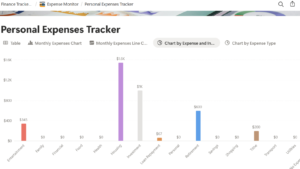
This is where a Notion Personal Finance Tracker with a visual dashboard becomes a game-changer.
Why a Notion Personal Finance Tracker Supports Financial Wellness
Your Notion tracker acts like a financial wellness assistant, helping you:
✔ Track income in real time
✔ Monitor expenses without overwhelm
✔ Compare actual versus budgeted spending
✔ Identify habits that need adjusting
✔ Improve saving and investing decisions
✔ Stay consistent month after month
Instead of rigid spreadsheets, your Notion dashboard brings everything into one calm, organised space, reducing mental load and financial stress.
Financial Wellness Is a Lifestyle, Not a Moment
When your finances are organised, aligned, and intentional:
Stress decreases
Confidence increases
Decisions feel easier
Goals feel achievable
Budgeting and spending awareness are the gateway habits that unlock savings, investing, and long-term financial freedom.
✨ Financial wellness isn’t about having more — it’s about using what you have wisely and calmly.
Final Thought
If your goal is peace, clarity, and control with money, start with visibility.
A smart budgeting system — especially one supported by a Notion Personal Finance Tracker with income and expense dashboards — turns financial wellness from an idea into a daily, stress-reducing practice.
Financial wellness is not about pressure.
It is about building systems that support your life — not strain it.
