

How Do I Heal Emotionally After Being Hurt?
How Do I Heal Emotionally After Being Hurt?
Emotional Regulation For Improve Wellbeing
A Practical Guide to Deep Emotional Healing
Emotional pain can feel invisible — yet it can be more intense than physical pain. Whether you were hurt by betrayal, rejection, loss, harsh words, broken trust, or unmet expectations, the wound can linger long after the event has passed.
If you’re asking, “How do I heal emotionally after being hurt?” — you are already taking the first step toward recovery.
Healing is not about pretending it didn’t happen. It’s about acknowledging the pain, processing it, and rebuilding yourself stronger and wiser.
Let’s walk through a grounded, practical, and compassionate approach to emotional healing.
1. Acknowledge the Hurt Instead of Suppressing It
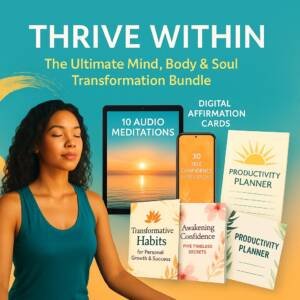
Thrive Within Wellness Bundle
Many people try to move on quickly. They distract themselves, stay busy, or tell themselves to “be strong.”
But unprocessed emotions do not disappear. They settle in the body and mind, often showing up as:
Irritability
Anxiety
Emotional numbness
Overthinking
Fatigue
Trust issues
Healing begins with honesty.
Ask yourself:
What exactly hurt me?
What did I lose in that experience?
What story am I telling myself about it?
Journaling can be powerful here. Writing clarifies emotions that feel overwhelming in your mind.
Healing Tip: Try writing a letter expressing everything you feel — without censoring yourself. You don’t need to send it. The goal is emotional release.
2. Allow Yourself to Grieve
Even if the situation didn’t involve death, emotional hurt often includes loss:
Loss of trust
Loss of expectations
Loss of identity
Loss of safety
Grief is not weakness. It is emotional processing.
You may experience denial, anger, sadness, bargaining, or acceptance — and not necessarily in order.
Give yourself permission to feel what comes up without judgment.
3. Separate the Event from Your Identity
One of the most damaging effects of emotional hurt is the internal story it creates:
“I’m not good enough.”
“I always get abandoned.”
“I can’t trust anyone.”
“I’m unlovable.”
These are pain-based narratives — not facts.
An experience happened. That does not define who you are.
Practice reframing:
Instead of → “I was rejected because I’m not worthy.”
Try → “That situation wasn’t aligned for me.”
This shift protects your self-worth while still honoring the experience.
4. Practice Emotional Regulation
When you’re hurt, your nervous system can stay in fight-or-flight mode. That’s why you may feel jumpy, reactive, or exhausted.
Grounding techniques help calm your system:
Deep breathing (inhale 4 seconds, exhale 6 seconds)
Slow walks in nature
Cold water on your face
Body scans or mindfulness meditation
Gentle stretching or yoga
These practices send a signal to your brain: You are safe now.
5. Set Healthy Emotional Boundaries
Sometimes emotional pain repeats because boundaries were weak or unclear.
Healing involves asking:
What will I no longer tolerate?
What behaviors crossed my line?
What do I need moving forward?
Boundaries are not about controlling others. They are about protecting your emotional wellbeing.
It’s okay to limit access to people who consistently hurt you.
6. Forgiveness — Without Forcing It
Forgiveness is often misunderstood.
It does not mean:
What happened was okay.
You must reconcile.
You must trust again.
Forgiveness is releasing the emotional grip the situation has on you.
And it takes time.
You may forgive in layers — and that’s normal.
7. Rebuild Trust Slowly
If you’ve been betrayed or deeply hurt, trust may feel impossible.
Start small.
Trust yourself first:
Trust your intuition.
Trust your boundaries.
Trust your ability to walk away if needed.
Then gradually open yourself again — wisely, not blindly.
8. Strengthen Emotional Resilience
Emotional resilience is not about avoiding pain — it’s about recovering from it.
You build resilience by:
Reflecting on past challenges you survived
Developing self-awareness
Practicing self-compassion
Maintaining supportive relationships
Taking care of your physical health
Every time you process pain instead of suppressing it, you grow stronger.
Recommended Resources for Emotional Healing
Healing doesn’t have to be done alone. Here are powerful tools that support recovery:
Books
A Conversation With The Sages by Sara Ahavah — explores how to deal with emotional turbulence using the wisdom of the sages and Kabbalah.
Spiritual Healing For Women by Sara Ahavah — combines spirituality with practical Kabbalah.
Forgive To Heal by Sara Ahavah — helpful if relational hurt is part of your pain.
Thrive Within Wellness Kit
Intant access to (powerful meditations)
Instant access to prayer kits for different situations (guided relaxation)
Instant access to journals, planners and worksheets (guided journaling)
- Instant access to prayers and emotional as well as wellness ebooks
Healing Prayers and Support
- Faith-based or spiritual counseling if aligned with you
Daily Practices
Gratitude journaling
Prayer or meditation
Mindful breathing routines
Regular physical movement
Healing accelerates when you combine emotional awareness with practical tools.
The Spiritual Dimension of Emotional Healing
For many people, emotional healing also involves spiritual growth.
Pain can deepen compassion.
Loss can refine purpose.
Betrayal can awaken discernment.
You may ask:
What is this experience teaching me?
How am I evolving through this?
What strengths am I discovering?
Spiritual growth does not remove pain — but it can transform it.
Final Thoughts: Healing Is a Process, Not an Event
Emotional healing is not linear. Some days you’ll feel strong. Other days the pain may resurface unexpectedly.
That does not mean you are failing.
It means you are human.
The goal is not to erase the memory — but to reduce its emotional charge.
Over time, what once felt overwhelming becomes something you survived.
And survival becomes strength.
If you are in the middle of emotional pain right now, know this:
You are not broken.
You are healing.
And healing is progress.
Other Types of Healing (Beyond Meditation)
1️⃣ Emotional Processing Work
This includes:
Trauma-informed therapy
Somatic therapy (body-based healing)
EMDR (for trauma)
Expressive writing
Inner child work
Example resource:
Psychology Today Therapist Finder
https://www.psychologytoday.com/us/therapists
2️⃣ Cognitive Healing (Changing Thought Patterns)
Pain often creates distorted beliefs like:
“I’m not good enough.”
“Everyone leaves.”
“I’ll never trust again.”
Cognitive Behavioral Therapy (CBT) helps restructure those patterns.
Helpful book:
Feeling Good by David Burns
https://www.amazon.com/dp/0380810336
3️⃣ Relationship & Attachment Healing
If your hurt came from relationships, attachment theory can be powerful.
Beyond “Attached,” you might explore:
The Secure Relationship (Instagram resource)
Thais Gibson’s Personal Development School (attachment healing)
4️⃣ Spiritual Healing (If You’re Inclined That Way)
 This may include:
Prayer
Community support
Faith counseling
Scripture study
Spiritual mentorship
Spiritual healing helps answer:
Why did this happen?
Who am I becoming through this?
How do I forgive and move forward?
🧘🏾 Why Meditation Is Often Recommended
Meditation is popular because:
✔ It regulates your stress response
✔ It reduces rumination
✔ It improves emotional awareness
✔ It builds self-compassion
But it’s a tool — not the entire solution.
Think of meditation as stabilizing the ground so you can safely do deeper emotional work.
💡 A Balanced Healing Framework
Instead of “just calming down,” a healthier healing approach might look like this:
Regulate → Calm your nervous system
Reflect → Process emotions honestly
Reframe → Challenge harmful beliefs
Repair → Strengthen boundaries & relationships
Rebuild → Develop new habits and resilience
That’s holistic healing.
🌿 If You’re Asking This Because…
If you’re feeling like:
“Breathing exercises aren’t enough.”
“I still feel hurt even after meditating.”
“I’m calm… but I’m not healed.”
That makes sense.
Calmness ≠ resolution.
You may need emotional processing, not just regulation.