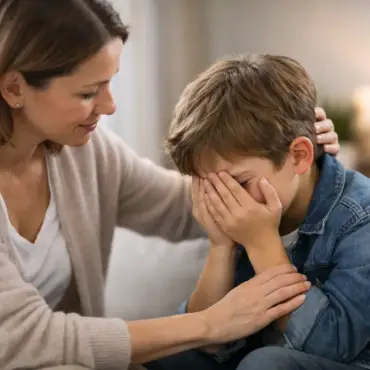

signs of unhealed childhood emotional wounds
Signs You Have Unhealed Childhood Emotional Wounds
Understanding the Patterns That Still Shape Your Life
There are moments in adult life when our reactions feel stronger than the situation calls for.
A delayed message feels like rejection.
A disagreement feels overwhelming.
A small mistake feels like failure.
Often, we try to rationalise these responses. We tell ourselves we are overthinking or simply having a difficult day.
But sometimes, these reactions are not about the present moment.
They are echoes of something earlier.
For many people, this is where the journey begins to heal childhood emotional wounds—by first recognising the signs that those wounds still exist.
Why It Matters to Recognise Emotional Wounds
Before we can begin to heal childhood emotional wounds, we must first recognise how they show up in our daily lives.
Childhood experiences shape how we understand:
- love
- safety
- belonging
- worth
As children, we interpret our environment personally.
If love felt inconsistent, we may learn to seek reassurance.
If we were criticised, we may strive for perfection.
If we felt unseen, we may struggle to feel valued.
These early interpretations often become internal beliefs that continue into adulthood.
Recognising these patterns is not about blame.
It is about awareness.
And awareness is the first step to change.
Common Signs of Unhealed Childhood Emotional Wounds
Emotional wounds rarely appear as clear memories.
Instead, they show up as patterns—reactions, behaviours, and emotional habits that feel familiar.
1. You Fear Rejection More Than You Realise
One of the most common signs is a deep sensitivity to rejection.
You may:
- feel anxious when someone becomes distant
- overanalyse conversations
- seek reassurance frequently
Example
Someone does not respond to your message quickly.
Instead of assuming they are busy, your mind moves to:
“Did I say something wrong?”
This reaction may be rooted in earlier experiences where emotional connection felt uncertain.
To heal childhood emotional wounds, it is important to recognise when current reactions are shaped by past experiences.
2. You Struggle to Set Boundaries
Many people with unhealed emotional wounds find it difficult to say no.
You may:
- agree to things you do not want to do
- avoid conflict
- prioritise others’ needs over your own
Example
You feel overwhelmed but still say yes to helping someone.
Internally, you may believe:
“If I say no, they might not value me.”
This belief often forms in environments where love felt conditional.
Learning to set boundaries is a key part of learning to heal childhood emotional wounds.
3. You Over-Give in Relationships
You may find yourself giving more than you receive.
You:
- support others constantly
- listen, help, and give your time
- feel drained but continue anyway
Example
In relationships, you may try to “earn” love through effort.
This can reflect an early belief such as:
“I must give to be loved.”
This pattern often continues until it is consciously recognised and shifted.
4. You Feel Responsible for Other People’s Emotions
You may feel a strong need to keep others happy.
You might:
- avoid upsetting people
- take responsibility for others’ feelings
- feel guilty when others are unhappy
Example
If someone is upset, you may immediately think:
“What did I do wrong?”
Even when the situation is not about you.
This pattern often develops in childhood environments where emotional stability depended on your behaviour.
5. You Experience Strong Emotional Triggers
Certain situations may trigger intense emotional responses.
You may feel:
- sudden anxiety
- defensiveness
- emotional withdrawal
- overwhelm
Example
A simple disagreement may feel like a personal attack.
This reaction is often not about the present moment—it is connected to earlier experiences.
Recognising these triggers is essential if you want to heal childhood emotional wounds.
6. You Struggle With Self-Worth
Unhealed emotional wounds often affect how you see yourself.
You may:
- doubt your value
- seek validation
- feel “not enough”
Example
Even when you achieve something meaningful, you may still feel it is not enough.
This reflects an internal belief formed earlier in life.
A Kabbalistic Perspective on Emotional Patterns
In Kabbalistic understanding, each person carries a path of tikkun—a journey of healing and transformation.
Emotional wounds are not seen as flaws.
They are seen as areas where awareness has not yet fully reached.
Kabbalah also describes klipot, protective layers formed around emotional pain.
These patterns once protected you.
But over time, they may begin to limit you.
They may keep you:
- stuck in repeating relationships
- disconnected from your needs
- reacting rather than responding
To heal childhood emotional wounds, we gently bring awareness to these patterns rather than judging them.
Why These Patterns Continue
One of the most important things to understand is this:
These patterns are not random.
They continue because they are supported by beliefs.
For example:
- “I am not enough”
- “I must please others”
- “I will be rejected if I speak honestly”
Until these beliefs are recognised, the pattern often repeats.
This is why awareness is the beginning of healing.
How to Begin to Heal Childhood Emotional Wounds
Once you recognise the signs, you can begin the process of healing.
Step 1: Notice Your Reactions
Pay attention to moments when your emotional response feels strong.
Ask:
- What just happened?
- What am I feeling?
Step 2: Pause Before Responding
Instead of reacting immediately, pause.
Take a few slow breaths.
This creates space for awareness.
Step 3: Identify the Belief
Ask yourself:
What belief might be behind this reaction?
For example:
- “I am not important”
- “I must avoid conflict”
Step 4: Introduce a New Understanding
Replace the old belief with a new one:
- “My needs matter”
- “I can be respected and still be honest”
Step 5: Choose a New Response
Take one small action that reflects your new belief.
For example:
- express your feelings
- set a boundary
- allow yourself to rest
These small actions help you actively heal childhood emotional wounds.
You Do Not Have to Do This Alone
Healing emotional wounds can feel overwhelming when done alone.
This is why support and structure are so important.
If you are ready to begin your journey to heal childhood emotional wounds, the Thrive Within Wellness Hub offers a safe and guided space to do so.
Through reflection tools, spiritual insight, and structured support, you can begin to understand your patterns and create lasting change.
👉 Begin your journey here:
https://thrivewithin.sarainnerhealing.com/
Closing Reflection
Recognising emotional wounds is not a sign of weakness.
It is a sign of awareness.
The patterns you experience today are often shaped by experiences that were never fully understood.
When you begin to notice them, you are already taking the first step to heal childhood emotional wounds.
And from that place of awareness, something powerful begins to happen.
You begin to choose differently.
And in those choices, your life begins to change.
For more articles like this why not read :
Making Sense Of Life – Reconnect With Your Spiritual Soul – Sara Inner Healing