
Emotional Healing
Emotional healing is a journey that almost everyone experiences at some point in life. Whether you are recovering from the loss of a loved one, a painful relationship, financial hardship, redundancy, betrayal or years of carrying emotional burdens, the desire to feel whole again is something we all understand.
One of the biggest misconceptions about emotional healing is that it happens quickly. Many people expect to wake up one morning and discover that the pain has disappeared. In reality, healing is usually gradual. It happens through small choices made consistently over time.
If you are wondering where to begin, the good news is that you do not need to have all the answers today. You only need to take the first step.
Accept That You Are Hurting
Many people try to ignore emotional pain. They keep themselves busy, throw themselves into work or convince themselves they should simply “move on.”
Unfortunately, ignored pain rarely disappears. It often resurfaces as anxiety, anger, exhaustion or hopelessness.
The first step towards healing is giving yourself permission to admit that something has hurt you.
Acceptance does not mean you approve of what happened. It simply means you are willing to acknowledge reality instead of fighting it.
There is strength in saying, “I am hurting, and I want to heal.”
Understand That Healing Is Not Linear
Some days you will feel hopeful. Other days the sadness may return unexpectedly.
This does not mean you are moving backwards.
Healing is rarely a straight line. It often involves progress, setbacks, reflection and growth.
Be patient with yourself.
Instead of measuring your progress by whether you still feel emotional, ask yourself whether you are responding differently than you did a month ago.
Growth is often easier to recognise when you look back rather than when you look forward.
Listen to Your Inner Narrative
Every difficult experience creates a story in our minds.
After rejection, you may begin believing that you are not good enough.
After betrayal, you may conclude that nobody can be trusted.
After financial hardship, you may tell yourself that you will never recover.
These stories often develop quietly, yet they influence almost every decision we make.
Spend time noticing the way you speak to yourself.
Would you speak to someone you love using those same words?
If the answer is no, begin replacing harsh self-criticism with compassionate truth.
Instead of saying, “I’m broken,” remind yourself, “I’m healing.”
That simple change can gradually reshape the way you see yourself.
Create Space for Reflection
Modern life rarely encourages stillness.
Yet healing often begins in quiet moments.
Set aside a few minutes each day to reflect without distractions.
Some people find this through journaling. Others prefer prayer, meditation or simply walking in nature.
Ask yourself questions such as:
What am I feeling today?
What do I need most right now?
What am I holding on to that is preventing me from moving forward?
You do not need immediate answers. Reflection creates awareness, and awareness creates change.
Care for Your Whole Self
Emotional healing is closely connected to physical wellbeing.
When you are exhausted, hungry or constantly stressed, emotional recovery becomes more difficult.
Simple daily habits can make a significant difference.
Drink enough water.
Eat nourishing meals.
Move your body regularly.
Spend time outdoors.
Get sufficient sleep.
These habits may seem ordinary, but they provide your mind and body with the stability needed for recovery.
Healing is not only about processing emotions. It is also about creating an environment where recovery becomes possible.
Allow Others to Support You
Many people try to carry emotional pain alone because they fear becoming a burden.
In reality, healthy relationships are often part of the healing process.
Talking to a trusted friend, family member, counsellor or faith leader can help you gain perspective and reduce the sense of isolation.
Sometimes another person cannot solve your problem, but simply being heard reminds you that you are not facing it alone.
If your emotional distress feels overwhelming or continues for a prolonged period, seeking professional support is a courageous and positive step.
Rediscover Hope
Hope is not pretending that life is perfect.
Hope is believing that your future does not have to be defined by your past.
Every person who has rebuilt their life after loss, trauma or disappointment began with a decision to keep moving forward, even when they could not see the whole path ahead.
That same possibility exists for you.
You may not feel completely different tomorrow.
You may not even feel different next week.
But every healthy choice you make today becomes part of the foundation upon which your future will be built.
A Spiritual Reflection
Many people discover that emotional healing is also a spiritual journey.
Pain has a way of revealing what truly matters. It encourages us to slow down, reflect and reconnect with our deepest values.
Whether your strength comes through prayer, gratitude, meditation or quiet reflection, allow yourself to remain open to hope.
Healing is not about becoming the person you were before the pain.
Sometimes it is about becoming a wiser, stronger and more compassionate version of yourself.
Frequently Asked Questions
How long does emotional healing take?
There is no fixed timeline. Healing depends on the nature of the experience, your support network and the steps you take towards recovery.
Can I heal emotional pain on my own?
Many people make significant progress through self-reflection, healthy habits and supportive relationships. However, professional support is valuable if your emotional distress feels overwhelming or persistent.
What is the most important first step?
The most important first step is acknowledging your pain without judging yourself for experiencing it. Acceptance creates the foundation for every other stage of healing.
Suggested Internal Links
- How Do I Start Healing After My Life Falls Apart?
- Why Do I Feel Empty Even When Everything Looks Fine?
- Feeling Lost or Stuck
- Emotional Balance
- Free Meditation
- Healing Prayers
- Gratitude Journals
- Thrive Within Membership
Conclusion
Emotional healing is not a race. It is a journey of learning to care for yourself with honesty, patience and compassion.
Every small step matters. Every healthy decision strengthens your resilience. Every moment of reflection brings greater understanding.
You may not be able to change yesterday, but you can begin shaping tomorrow.
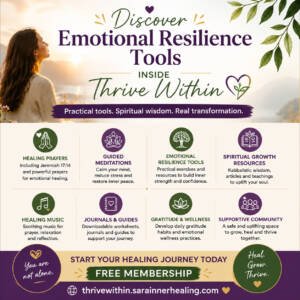
At Thrive Within, we believe healing begins from within. Through guided meditation, gratitude practices, prayer, emotional wellness resources and a supportive community, we are here to help you take the next step on your journey towards hope, healing and lasting transformation