
Mental Health Tips for Anxiety
Practical Ways to Calm Your Mind and Find Inner Peace
Introduction
Anxiety is one of the most common mental health challenges people face today. It can affect your thoughts, emotions, relationships, sleep and even your physical health. While feeling anxious from time to time is a normal response to life’s challenges, persistent anxiety can leave you feeling overwhelmed, exhausted and unable to enjoy the present moment.
The good news is that anxiety does not have to control your life.
There are many practical steps you can take to improve your mental wellbeing, build emotional resilience and develop healthier ways of responding to stress. Healing is not about eliminating every anxious thought; it is about learning how to respond differently to those thoughts so they no longer dominate your life.
At Sara Inner Healing, we believe lasting emotional wellbeing comes from healing the root, not the branch. Alongside practical mental health strategies, emotional healing, prayer, meditation and spiritual reflection can all play an important role in helping you find lasting peace.
This article shares practical mental health tips for anxiety that you can begin using today.
What Is Anxiety?
Anxiety is your body’s natural response to stress or perceived danger. It is designed to protect you by making you alert to potential threats.
However, when anxiety becomes constant or disproportionate to the situation, it can begin affecting every area of your life.
Common symptoms include:
- Constant worrying
- Racing thoughts
- Difficulty concentrating
- Restlessness
- Irritability
- Muscle tension
- Difficulty sleeping
- Rapid heartbeat
- Feeling overwhelmed
- Avoiding situations because of fear
Understanding anxiety is the first step towards managing it more effectively.
1. Learn to Recognise Your Triggers
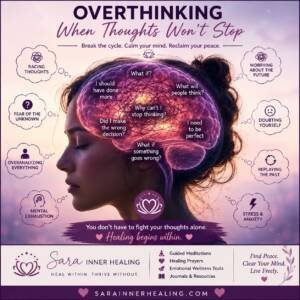
Many people experience anxiety without fully understanding what causes it.
Keeping a journal can help you identify patterns.
Ask yourself:
- What happened before I became anxious?
- What thoughts were going through my mind?
- How did my body respond?
- Was I tired, stressed or overwhelmed?
Recognising your triggers allows you to prepare healthier responses instead of reacting automatically.
2. Challenge Anxious Thoughts
Anxiety often convinces us that our worst fears are facts.
Pause and ask yourself:
- Is there evidence this will happen?
- Am I assuming the worst?
- What would I say to a friend in this situation?
Learning to separate facts from fearful assumptions can significantly reduce anxiety over time.
3. Focus on What You Can Control
One of the greatest sources of anxiety is trying to control things that are beyond our influence.
Instead, focus on today’s choices.
Ask yourself:
“What is one positive action I can take right now?”
Small actions restore confidence and reduce feelings of helplessness.
4. Create a Daily Routine
Predictability helps calm an anxious mind.
Try to maintain regular times for:
- Sleeping
- Meals
- Exercise
- Prayer or meditation
- Relaxation
- Family time
Simple routines create emotional stability.
5. Reduce Overthinking
Overthinking and anxiety often go hand in hand.
Instead of replaying problems repeatedly, gently redirect your attention towards the present moment.
Practising mindfulness, journalling or slow breathing can help interrupt repetitive thought patterns.
6. Move Your Body
Physical activity helps release built-up tension and supports emotional wellbeing.
Choose activities you enjoy, such as:
- Walking
- Yoga
- Tai Chi
- Swimming
- Cycling
- Stretching
Even twenty minutes each day can improve your mood.
7. Prioritise Quality Sleep
Anxiety often disrupts sleep, while poor sleep increases anxiety.
Create a calming bedtime routine by:
- Limiting screen time before bed.
- Drinking herbal tea.
- Reading something uplifting.
- Practising gratitude.
- Diffusing calming essential oils.
Good sleep supports emotional resilience.
8. Strengthen Your Spiritual Wellbeing
Many people discover that prayer and meditation help calm anxious thoughts.
Rather than focusing only on the problem, spend time focusing on hope, gratitude and trust.
Psalm 46:10 reminds us:
“Be still, and know that I am God.”
Moments of stillness help quiet the mind and restore perspective.
9. Build an Emotional Wellness Toolkit
Healing rarely comes from one solution alone.
Create your own toolkit containing resources that support your wellbeing.
This may include:
- Guided meditation
- Prayer journal
- Gratitude journal
- Bach Flower Remedies
- Essential oils
- Herbal teas
- Uplifting music
- Time in nature
- Positive affirmations
Having these tools readily available makes it easier to respond positively during anxious moments.
Natural Wellness Resources
Many people find these supportive wellness products helpful alongside healthy lifestyle habits.
Bach Flower Remedies
- Rescue Remedy
- White Chestnut
- Aspen
- Mimulus
- Cherry Plum
- Walnut
Essential Oils
- Lavender
- Frankincense
- Bergamot
- Roman Chamomile
- Vetiver
Herbal Teas
- Chamomile
- Lemon Balm
- Passionflower
- Tulsi
- Lavender Tea
These products should be viewed as supportive wellbeing tools rather than treatments for anxiety. If anxiety is persistent, severe or affecting your daily life, seek advice from a qualified healthcare professional.
Healing Reflection
Anxiety often tells us that we must solve everything immediately.
Healing teaches us something different.
It reminds us that peace is built one small choice at a time.
Every deep breath.
Every act of gratitude.
Every healthy boundary.
Every prayer.
Every step towards healing.
Progress is more important than perfection.
Prayer for Peace
Heavenly Father,
When anxious thoughts fill my mind, help me to remember that I am not alone.
Replace fear with faith, confusion with wisdom and worry with peace.
Give me the strength to focus on what I can control and the courage to trust You with everything else.
Create in me a calm heart and a steadfast spirit.
Help me to become more resilient, more hopeful and more confident with each passing day.
May Your peace guard my heart and my mind.
Amen.
Key Takeaways
- Anxiety is common, but it does not have to control your life.
- Small daily habits can significantly improve emotional wellbeing.
- Challenge fearful thoughts with facts.
- Develop healthy routines that support mental health.
- Build your own emotional wellness toolkit.
- Seek professional support if anxiety becomes persistent or overwhelming.
- Healing begins by addressing the root causes, not just the symptoms.
Continue Your Healing Journey
If you’re ready to strengthen your emotional wellbeing, explore Thrive Within – Your Healthiest Toolkit for Emotional Wellness.
Inside you’ll discover:
- Guided meditations
- Healing prayers
- Emotional wellness articles
- Gratitude and reflection journals
- Self-care resources
- Relationship guides
- Spiritual healing tools
- Practical exercises to help you build resilience and inner peace
Healing the root is the first step towards lasting emotional freedom.
Check out additional resources:
- Mental Health Tips for Everyday Wellbeing
- How to Stop Overthinking
- Spiritual Healing for Overthinking
- How to Stop Overthinking in Relationships
- Emotional Healing: A Beginner’s Guide
- Healing Prayers for Anxiety
- Self-Care & Daily Wellbeing
- Benefits of Keeping a Gratitude Journal
- Thrive Within Wellness
- Sara Inner Healing Book Collection