
Free 3-3-3 Gratitude Journal Template
This gives us a strong practical article with a clear purpose: attract readers searching for gratitude journaling guidance and encourage them to download your free template.
We’ll make it original rather than reproduce Compassion UK’s article, and distinguish it from your existing What Is a Gratitude Journal? pillar page. The focus here will be how to use a gratitude journal, with the free 3-3-3 template as the main offer.
How to Start a Gratitude Journal: Free 3-3-3 Gratitude Journal Template
Sara_Inner_Healing_333_Gratitude_Guide
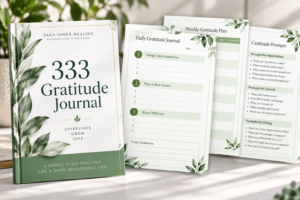
Free 333 Gratitude Journal
Discover how to start a gratitude journal in just five minutes a day with our free 3-3-3 Gratitude Journal Template. Learn to appreciate life’s blessings, recognise personal growth and turn gratitude into meaningful action.
Have you ever reached the end of a difficult day feeling that nothing went right?
Perhaps you faced disappointment, struggled with responsibilities or found yourself worrying about circumstances beyond your control.
Yet somewhere within that day, there may have been a moment of kindness, an opportunity to learn or something meaningful you overlooked.
Gratitude journaling helps you become more aware of those experiences.
At Sara Inner Healing, we believe gratitude is more than a positive thought. It is a conscious practice that can nurture emotional wellbeing, deepen spiritual awareness and encourage lasting personal transformation.
Gratitude is not about pretending life is perfect. It is about learning to recognise what is meaningful while developing the inner strength to face what is difficult.
And the beautiful thing is that you can begin with just five minutes a day.
What Is a Gratitude Journal?
A gratitude journal is a personal record of the people, experiences, opportunities and moments you appreciate in your life.
It encourages you to pause, reflect and consciously recognise what brings meaning to your everyday experiences.
For example, you might write:
- I am grateful for the friend who encouraged me today.
- I appreciate the peaceful morning that helped me begin my day calmly.
- I am thankful that I remained patient during a difficult conversation.
A gratitude journal does not need to contain long paragraphs or complicated reflections.
The purpose is to develop greater awareness and appreciation.
However, gratitude becomes even more meaningful when you explore why something matters and how that appreciation can influence your actions.
Why Should You Start a Gratitude Journal?
Our attention is often drawn towards problems, unfinished responsibilities and disappointing experiences.
While recognising difficulties is necessary, focusing exclusively on them can make it harder to appreciate the positive and supportive aspects of life.
Gratitude journaling creates an opportunity to develop a more balanced perspective.
Research into gratitude practices suggests that they may support psychological wellbeing, although the effects vary between individuals and should not be overstated.
Here are five potential benefits.
1. Develop Greater Emotional Awareness
Writing about your experiences encourages you to recognise your emotions and reflect on how you respond to them.
This can support healthier emotional regulation habits.
2. Encourage a More Balanced Mindset
Gratitude helps you notice meaningful experiences alongside life’s challenges.
It does not require you to deny disappointment, sadness or frustration.
3. Strengthen Self-Appreciation
Reflecting on personal progress allows you to recognise strengths, achievements and lessons that might otherwise go unnoticed.
4. Nurture Meaningful Relationships
When you become more aware of kindness and support, you may feel encouraged to express appreciation towards others.
5. Deepen Spiritual Awareness
For spiritually minded individuals, gratitude can become a practice of recognising life’s blessings and reflecting on how to bring goodness into the world.
The deeper value of gratitude is not simply what it helps us recognise, but how that awareness influences the person we become.
How to Start a Gratitude Journal in Five Simple Steps
Beginning a gratitude journal is easier than you might imagine.
Step 1: Choose a Journal
You can use a notebook, diary, digital document or printable gratitude journal template.
Choose something convenient and comfortable.
You do not need an expensive journal to begin.
Step 2: Set Aside Five Minutes
Select a quiet moment in the morning or evening.
Morning journaling can help you begin the day with appreciation and intention.
Evening journaling allows you to reflect on meaningful experiences from the day.
Step 3: Identify What You Appreciate
Begin with three things you are grateful for.
They might include relationships, opportunities, personal achievements or simple everyday experiences.
Step 4: Reflect on Your Personal Growth
Consider what you have learned or how you have responded to challenges.
Recognising your growth encourages greater self-awareness.
Step 5: Express Gratitude Through Action
Think about how you can demonstrate appreciation through kindness, encouragement or care for yourself and others.
This final step transforms gratitude from a private reflection into a conscious daily practice.
Introducing the Free 3-3-3 Gratitude Journal Template
Many people begin gratitude journaling with enthusiasm but struggle to maintain the practice.
They may find themselves writing the same three things every day or wondering whether they are doing it correctly.
Our free 3-3-3 Gratitude Journal Template provides a simple structure to help you develop a meaningful routine.
At Sara Inner Healing, we use the Appreciate, Grow and Give approach.
It involves three stages.
1. APPRECIATE — Three Things You Are Grateful For
Recognise three meaningful experiences, people or opportunities.
Examples:
- I am grateful for the kindness I received today.
- I appreciate having time to rest and reflect.
- I am thankful for the opportunity to learn something new.
2. GROW — Three Areas of Personal Growth
Reflect on three strengths, lessons or positive changes.
Examples:
- I responded calmly instead of reacting impulsively.
- I recognised when I needed a healthy boundary.
- I made progress towards a meaningful personal goal.
3. GIVE — Three Ways to Express Gratitude
Choose three actions that allow you to demonstrate appreciation.
Examples:
- I will thank someone who has supported me.
- I will offer encouragement to another person.
- I will show myself compassion and make time for rest.
This creates a simple daily journey:
APPRECIATE → GROW → GIVE
The framework presented here is Sara Inner Healing’s approach to the 3-3-3 exercise. Different versions of the method exist, and this particular format is not a separately scientifically validated intervention.
Download Your Free 3-3-3 Gratitude Journal Template
Begin your gratitude journey with a simple printable guide designed to help you develop emotional awareness, personal growth and a daily practice of appreciation.
Your free template includes:
- A simple explanation of the 3-3-3 Gratitude Journal Method.
- A printable daily gratitude worksheet.
- Guided reflections for Appreciate, Grow and Give.
- A seven-day gratitude practice plan.
- Space to reflect on your emotional and spiritual development.
Sara_Inner_Healing_333_Gratitude_GuideFive minutes a day. Three simple steps. A more conscious approach to gratitude.
A Simple Daily Gratitude Journal Example
Here is an example of how you might complete your journal.
Date: Monday
APPRECIATE
- I am grateful for the peaceful moments I experienced this morning.
- I appreciate the encouragement I received from a friend.
- I am thankful for the opportunity to complete an important responsibility.
GROW
- I recognised my frustration without reacting immediately.
- I acknowledged that I needed rest.
- I communicated my feelings with greater patience.
GIVE
- I will express appreciation to someone who has supported me.
- I will offer kindness to someone facing a difficult situation.
- I will make time to care for my emotional wellbeing.
My daily reflection:
“Today, I recognise that gratitude is not simply about what I receive. It is also about the kindness, awareness and love I choose to express.”
How to Make Gratitude Journaling a Daily Habit
Free 333 Gratitude Journal
Consistency can make gratitude journaling more meaningful, but your routine should remain flexible.
Begin with five minutes.
Keep your journal somewhere visible.
Choose a regular time that suits your lifestyle.
Use simple prompts when you are unsure what to write.
Most importantly, avoid turning gratitude into another obligation.
Some days you may write detailed reflections. Other days, a single meaningful sentence may be enough.
The aim is not perfection.
The aim is awareness.
Gratitude Journaling for Emotional Healing
Emotional healing often involves recognising the beliefs, fears and experiences that influence our thoughts and behaviour.
Gratitude journaling can support this process by encouraging reflection and a more balanced understanding of our experiences.
For example, someone recovering from rejection may begin noticing moments of kindness and acceptance.
Someone experiencing self-doubt may recognise personal strengths and achievements they previously overlooked.
However, gratitude should never be used to suppress pain or dismiss difficult emotions.
You can acknowledge disappointment while appreciating support.
You can experience uncertainty while recognising your resilience.
And you can establish healthy boundaries while remaining grateful for meaningful relationships.
At Sara Inner Healing, our philosophy is:
Heal the root, not the branch.
This means exploring the deeper patterns influencing our emotional experiences rather than focusing only on immediate reactions.
Gratitude can become one supportive practice within that journey.
The Spiritual Power of Gratitude: From Receiving to Giving
Gratitude has a deeper spiritual meaning when appreciation begins to influence our intentions and relationships.
In Kabbalistic wisdom, spiritual transformation involves developing the intention to bestow—to bring goodness and benefit to others rather than acting solely from self-interest.
The Sara Inner Healing 3-3-3 framework complements this principle.
First, we appreciate what we receive.
Then, we recognise the growth taking place within us.
Finally, we consider how to express goodness through our actions.
Gratitude becomes a spiritual practice when appreciation awakens the desire to bring love, kindness and connection into the world.
This is the deeper purpose of the Appreciate, Grow and Give approach.
Frequently Asked Questions About Gratitude Journaling
What should I write in a gratitude journal?
Begin with three things you appreciate, such as a meaningful relationship, a peaceful moment or an opportunity for personal growth.
How many things should I be grateful for each day?
Three is a practical starting point, but there is no compulsory number.
What is the 3-3-3 Gratitude Journal Method?
In the Sara Inner Healing version, you write three things you appreciate, three areas of personal growth and three ways to express gratitude through action.
Is gratitude journaling good for beginners?
Yes. You can begin with short, simple reflections and gradually explore your experiences in greater depth.
Can gratitude journaling help with anxiety?
Gratitude journaling may support emotional reflection and a more balanced perspective for some people. However, it is not a treatment or cure for anxiety disorders.
Is it better to write in the morning or evening?
Both can be useful. Choose a time that allows you to reflect comfortably and consistently.
Do I need to practise gratitude every day?
No. Regular reflection can be beneficial, but the practice should remain meaningful rather than stressful.
Conclusion: Begin Your Gratitude Journey Today
A gratitude journal is more than a notebook filled with positive thoughts.
It is an opportunity to recognise what matters, understand your emotions and become more intentional about how you live.
You do not need extraordinary circumstances to begin.
Start with one meaningful moment.
Recognise one area of personal growth.
Choose one way to bring goodness into another person’s life.
Then allow those small reflections to become part of your daily practice.
The true power of gratitude is not simply recognising the blessings we receive, but allowing that appreciation to transform the love we give.
Download your free 3-3-3 Gratitude Journal Template and begin your journey today.
Sara Inner Healing — Heal the Root, Not the Branch. Discover Your Divine Power.
About the Author
Dr Shelah Harris (Pen Name Sara Ahavah) is the founder of Sara Inner Healing, a spiritual coaching and personal transformation platform helping people heal the root causes of emotional and spiritual challenges and create meaningful change from within.
Her work brings together spiritual wisdom, inner healing and transformational coaching to help people understand the deeper patterns shaping their lives, reconnect with their inner power, and live with greater purpose, balance and self-awareness.
Through Sara Inner Healing, she shares practical guidance, courses and coaching resources designed to support lasting personal and spiritual transformation.