
What is a Gratitude Journal? A Gentle Guide to Emotional Healing
Have you ever reached the end of a day feeling overwhelmed by everything that went wrong, even though several things went right? Perhaps someone showed you kindness, you completed an important task, or you experienced a brief moment of peace. Yet your mind remained focused on disappointment, frustration or uncertainty. This is where gratitude journaling can begin to change your perspective.
A gratitude journal is more than a notebook filled with positive thoughts. It is a deliberate practice of directing your awareness towards the good that exists in your life, even when circumstances are difficult. At Sara Inner Healing, we believe that gratitude can become a powerful pathway to emotional healing, spiritual awareness and personal transformation. Gratitude is not simply about appreciating what you have. It is about transforming the way you experience life.
What Is a Gratitude Journal For Transformation?
A gratitude journal is a personal record in which you regularly write about the people, experiences, opportunities and moments for which you feel thankful. It encourages you to consciously recognise positive aspects of your life that might otherwise go unnoticed. For example, instead of ending your day thinking about an unpleasant conversation, you might reflect on someone who supported you, a lesson you learned or an unexpected moment of kindness.
There is no single correct way to keep a gratitude journal. Some people write detailed reflections, while others record just a few sentences each morning or evening. What matters is not the length of your writing but the awareness and sincerity behind it.
A comprehensive gratitude journal can include:
- Three things you appreciate each day.
- People who have positively influenced your life.
- Experiences that have helped you grow.
- Personal strengths you are learning to recognise.
- Difficult situations that have revealed meaningful lessons.
- Moments of spiritual connection, peace or inner awareness.
💡 Spiritual Healing Step: If you want to explore the deeper spiritual layers of this practice and how it supports soul correction, read our companion guide on how to maintain a Gratitude Journal To Support Emotional Healing.
Why Is Keeping a Gratitude Journal Important?
Our minds naturally pay attention to problems, threats and unfinished responsibilities. This tendency can help us recognise danger and respond to challenges. However, when our attention becomes dominated by what is wrong, we may overlook what is still meaningful and supportive in our lives.
Gratitude journaling offers an opportunity to develop a more balanced perspective. Rather than denying life’s difficulties, you intentionally create space to acknowledge what is good alongside what is challenging. Over time, this practice may support greater emotional awareness, appreciation and psychological wellbeing. The purpose is not to convince yourself that everything is perfect. The purpose is to recognise that your difficulties do not represent the whole of your life.
On particularly difficult days, it is also acceptable not to find an immediate reason for gratitude.
Step 6: Reflect on Your Progress
At the end of each week, read some of your previous entries and notice recurring themes. Are you becoming more aware of supportive relationships? Have your priorities changed? Are you recognising moments of growth? Your journal can become a valuable record of your emotional and spiritual development.
What Is an Example of a Gratitude Journal?
Here is a simple example of a daily gratitude journal entry:
- Date: Monday
- Three things I am grateful for:
- My health: I appreciate the ability to move, work and care for myself today.
- A meaningful conversation: Someone listened to me without judgement, reminding me of the value of genuine connection.
- An opportunity to grow: A challenging situation helped me recognise that I can respond more patiently than I once did.
- Today’s emotional reflection: I felt anxious about an unfinished responsibility. However, I recognised that worrying would not resolve the situation. I chose to focus on what I could reasonably accomplish.
- Today’s spiritual intention: I will express appreciation through my actions by showing kindness, patience and understanding towards others.
This approach seamlessly combines daily appreciation, emotional awareness, and intentional personal growth.
Gratitude Journaling for Emotional Healing
One of the most meaningful applications of gratitude journaling is its ability to support reflection during emotionally difficult periods. When people experience disappointment, betrayal, loss or rejection, their attention may become concentrated on painful memories. These experiences deserve acknowledgement and compassion.
However, emotional healing also involves recognising that the past does not have to define every future experience. Gratitude journaling can help you notice moments that challenge limiting beliefs. For example, someone who believes that nobody cares about them might begin recording occasions when others demonstrate kindness. Over time, these observations may help them develop a more balanced understanding of their relationships.
At Sara Inner Healing, our guiding philosophy is to heal the root, not the branch. This means looking beyond immediate emotional reactions to explore the underlying beliefs, fears, and patterns influencing them. Gratitude can support this process by helping you recognise both your pain and the possibilities for change.
Gratitude as a Spiritual Practice: More Than Positive Thinking
There is a deeper dimension to gratitude that extends far beyond emotional well-being. In spiritual practice, gratitude can become an expression of humility, awareness, and connection. Instead of viewing life exclusively through the question, “What am I receiving?”, we begin asking: “What can I appreciate, and how can I use what I have received to bring goodness to others?”
This shift is especially meaningful within the wisdom of Kabbalah, where spiritual development involves transforming self-centred intentions towards love, connection, and bestowal. Gratitude perfectly supports that transformation. When we appreciate the kindness we receive, we become more willing to extend kindness ourselves. When we recognise the value of connection, we become more conscious of the ways our actions affect others. When we acknowledge opportunities for growth, we can begin approaching challenges with greater responsibility and awareness. From this perspective, gratitude is not merely a feeling—it becomes an intention expressed through how we live.
Can Gratitude Journaling Help With Anxiety?
Gratitude journaling may help some people manage everyday stress and anxious thoughts by encouraging attention towards supportive and meaningful experiences. For example, if your mind is occupied by uncertainty about tomorrow, writing about moments of stability and support today may help create a more balanced perspective.
However, gratitude is not a cure for anxiety disorders, and it should not be used to suppress difficult feelings. If anxiety is persistent or significantly affects daily functioning, professional support may be appropriate. The aim of gratitude journaling is to complement healthy emotional regulation, not replace it.
Common Gratitude Journaling Mistakes to Avoid
- Forcing Yourself to Feel Positive: You do not have to feel happy to practise gratitude. Acknowledging a difficult emotion while appreciating something meaningful is more authentic than pretending your pain does not exist.
- Repeating the Same Entries Without Reflection: There is nothing wrong with appreciating the same people or experiences repeatedly. However, try exploring different reasons why they matter. Specific reflection can make the practice more meaningful.
- Comparing Your Gratitude With Others: Your experiences are personal. Something that appears insignificant to another person may hold profound meaning for you.
- Expecting Immediate Transformation: Gratitude journaling is a practice, not an instant solution. Its value often develops through regular reflection and the gradual strengthening of self-awareness.
- Using Gratitude to Avoid Necessary Change: Being grateful does not mean accepting harmful relationships, unhealthy environments or unfair treatment. You can appreciate aspects of your life while recognising that other aspects need to change.
10 Gratitude Journal Prompts for Beginners
If you are unsure what to write, choose one or two of these questions each day and explore them honestly:
- What three things brought me comfort or joy today?
- Who has shown me kindness recently, and why did it matter?
- What personal strength helped me through a difficult experience?
- What is one thing about my life that I sometimes take for granted?
- What have I learned about myself this week?
- What small achievement deserves recognition?
- What experience helped me feel connected to another person?
- What is something from my past that I now understand differently?
- How can I express gratitude through an act of kindness today?
- What opportunity do I have to bring more love and goodness into the world?
Frequently Asked Questions About Gratitude Journals
What is the main purpose of a gratitude journal?
The main purpose is to develop conscious awareness of the positive and meaningful aspects of life. It can encourage appreciation, emotional reflection, and a more balanced perspective.
How many things should I write in a gratitude journal?
Three things each day is a simple starting point. However, you can write one meaningful reflection or several entries, depending on your preference.
Should I write in my gratitude journal every day?
Daily journaling can help establish a routine, but it is not compulsory. A sustainable practice that you genuinely engage with is more valuable than a rigid schedule.
Can I use a gratitude journal for self-improvement?
Yes. Gratitude journaling can support self-improvement by helping you recognise your strengths, identify meaningful experiences and reflect on personal growth.
What is the 3-3-3 gratitude journal method?
The 3-3-3 method involves writing three things you appreciate, three positive intentions or personal strengths, and three expressions of gratitude through action. To help you start this practice seamlessly, you can download our free printable 3-3-3 Gratitude Journal Guide PDF right now.
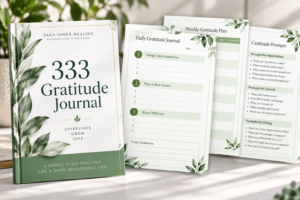
Free 333 Gratitude Journal
Can I practise gratitude when life is difficult?
Yes, but gratitude should never become an obligation to deny suffering. You can acknowledge pain while remaining open to moments of kindness, connection or meaning.
Conclusion: Begin Your Gratitude Journey Today
A gratitude journal is more than a collection of thankful thoughts. It is an invitation to become more conscious of your experiences, understand your emotions and recognise the opportunities for growth within everyday life. You do not need to wait until your circumstances improve before you begin anchoring your days in peace.
If you want a dedicated, beautifully bound space to hold your daily transformations, explore The Ultimate Gratitude Journal For Women to claim your own physical copy and start your morning and evening reflection rituals today.

About the Author
Dr Shelah Harris (Pen Name Sara Ahavah) is the founder of Sara Inner Healing, a spiritual coaching and personal transformation platform helping people heal the root causes of emotional and spiritual challenges and create meaningful change from within.
Her work brings together spiritual wisdom, inner healing and transformational coaching to help people understand the deeper patterns shaping their lives, reconnect with their inner power, and live with greater purpose, balance and self-awareness.
Through Sara Inner Healing, she shares practical guidance, courses and coaching resources designed to support lasting personal and spiritual transformation.